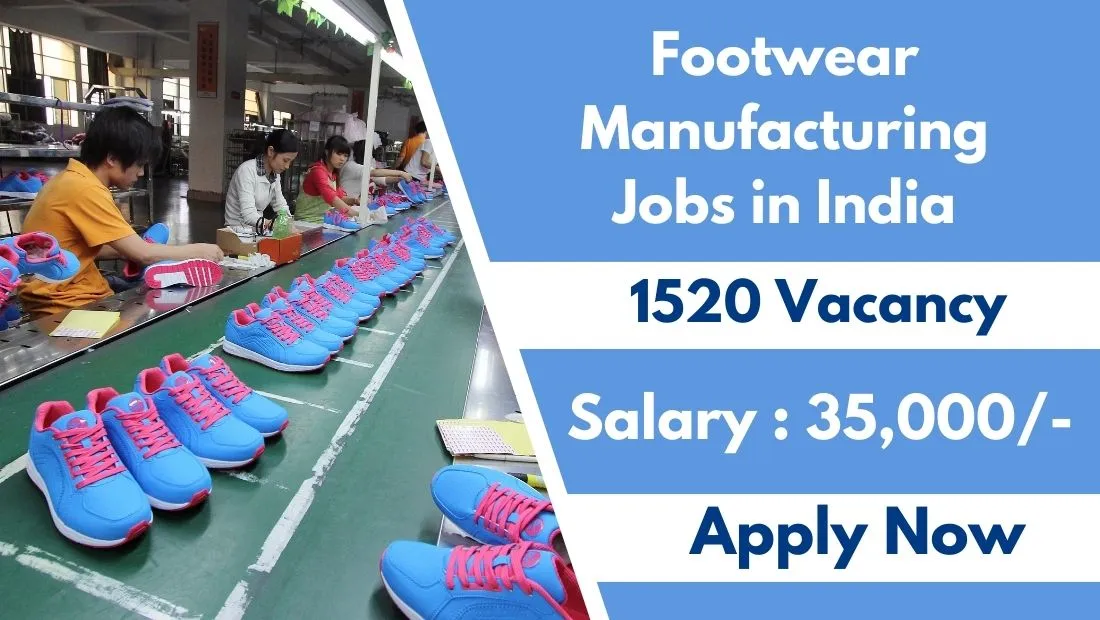
Footwear is an essential part of everyday life. From affordable slippers to premium leather shoes and sports sneakers, footwear products are used by people across all income groups. But behind every pair of shoes is a structured manufacturing process powered by skilled human labor. In India, footwear manufacturing jobs are emerging as a reliable employment option for individuals seeking stable factory jobs, hands-on work, and long-term career growth.
India is among the world’s largest producers and exporters of footwear. With rising domestic demand and growing international orders, footwear factories across states like Uttar Pradesh, Tamil Nadu, Haryana, Maharashtra, and West Bengal are continuously hiring workers. For fresh job seekers, migrants, women workers, and individuals without higher education, this industry offers real opportunities to earn a regular income and develop practical skills.
What Do Footwear Manufacturing Jobs Involve?
Footwear manufacturing is a process-driven industry where each stage contributes to the final product’s quality and durability. Jobs are available across multiple departments, depending on experience, physical ability, and skill level.
Workers may be involved in cutting raw materials, stitching shoe uppers, attaching soles, operating machines, inspecting finished products, or packing items for shipment. Most factories provide on-the-job training, making it easier for beginners to start working without prior experience.
Common Job Responsibilities
- Cutting leather, rubber, foam, or synthetic materials
- Stitching shoe uppers using manual or automated machines
- Fixing soles, insoles, heels, and straps
- Operating molding, pressing, or sole-fixing machines
- Applying adhesives and finishing touches
- Inspecting footwear for defects in size, finish, or comfort
- Packing, labeling, and preparing products for dispatch
Each role contributes to large-scale production, and teamwork plays a major role in meeting daily output targets.
Types of Footwear Manufacturing Jobs Available
The footwear industry offers a mix of entry-level factory jobs and skilled technical roles, making it accessible to workers from diverse backgrounds.
Common Job Roles in Footwear Factories
- Cutter – Measures and cuts materials according to design specifications
- Stitcher – Sews leather or fabric parts to create the shoe upper
- Assembler / Sole Fitter – Joins uppers and soles using machines or adhesives
- Machine Operator – Handles stitching, molding, or pressing machines
- Quality Checker – Inspects finished shoes for defects and standards
- Helper / Line Worker – Assists skilled workers and manages materials
- Packing Staff – Packs and labels finished footwear for transport
- Supervisor – Oversees production lines and worker performance
Many workers start as helpers and gradually move into skilled roles through experience and training.
Eligibility Criteria: Who Can Apply?
One of the biggest advantages of footwear manufacturing jobs is low entry barriers. Formal education is not a strict requirement for most roles.
Basic Eligibility Requirements
- Education: 8th to 10th pass (higher education not mandatory)
- Age: Generally 18 to 35 years (varies by company)
- Gender: Both men and women are employed
- Experience: Not required for entry-level positions
- Skills Needed: Hand-eye coordination, attention to detail, physical stamina
People with experience in tailoring, garment factories, handicrafts, or assembly-line work often adapt quickly to footwear manufacturing roles.
Apply Here
Skills That Improve Salary and Career Growth
While beginners can start without experience, skill development plays a major role in salary growth and job security.
In-Demand Skills
- Operating stitching, molding, or pressing machines
- Understanding different footwear materials and designs
- Quality control and defect identification
- Teamwork and communication on production lines
- Consistency in maintaining output and standards
Workers who learn multiple tasks and show flexibility are often promoted faster or receive higher wages.
Salary Structure, Shifts, and Benefits
Footwear manufacturing offers regular monthly income, especially in export-oriented factories and branded production units.
Average Monthly Salary in India
- Helper: ₹9,000 – ₹12,000
- Stitcher: ₹11,000 – ₹15,000
- Sole Fitter / Assembler: ₹12,000 – ₹17,000
- Machine Operator: ₹13,000 – ₹18,000
- Quality Inspector: ₹14,000 – ₹20,000
- Supervisor: ₹20,000 – ₹28,000
Salaries increase with experience, productivity, and skill specialization.
Work Shifts and Benefits
- 8–10 hour shifts with weekly offs
- Overtime during peak production seasons
- PF and ESI (for direct or agency hires)
- Attendance incentives and performance bonuses
- Subsidized meals or canteen facilities
- Paid training and annual increments
These benefits make footwear factory jobs more stable than daily-wage labor.
Real-Life Career Growth in the Footwear Industry
Many workers build long-term careers in this sector. For example, Meenakshi from Vellore transitioned from tailoring to footwear stitching. With training and experience, she now supervises a small team and earns a steady income. Stories like hers highlight how skill-based manufacturing jobs can empower workers, especially women and those from semi-urban areas.
Real Story: Skills That Built a Future
Meenakshi, a 32-year-old stitcher from Vellore, started working in a footwear unit after her tailoring business slowed down.
“I joined through a contractor and thought it would be a short-term thing. But the factory trained me, and now I lead a small stitching team. The income is regular, and I’ve even helped my sister get a job here,” she shares proudly.
Her story shows how a skill-based job in this sector can empower workers—especially women—from small towns and semi-urban areas.
HHow to Apply for Footwear Manufacturing Jobs in India
Jobs are commonly available in industrial hubs such as Agra, Ambur, Chennai, Kanpur, Noida, Bahadurgarh, and Kolkata.
Best Ways to Apply
- Job apps like Apna, WorkIndia, Naukri, and Indeed
- Factory walk-in interviews
- Local staffing or manpower agencies
- Skill development centers under NSDC or PMKVY
- Employee referrals from existing workers
Always verify job details and avoid paying money for job offers.
Final Thoughts: Is Footwear Manufacturing a Good Career Choice?
If you are looking for stable employment, skill-based income, and long-term growth without high education costs, footwear manufacturing jobs can be an excellent choice. With India’s footwear exports and domestic demand rising every year, the industry promises consistent job opportunities.
For individuals willing to learn, work with discipline, and grow step by step, this sector offers a reliable path toward financial stability and career development—one pair of shoes at a time.
