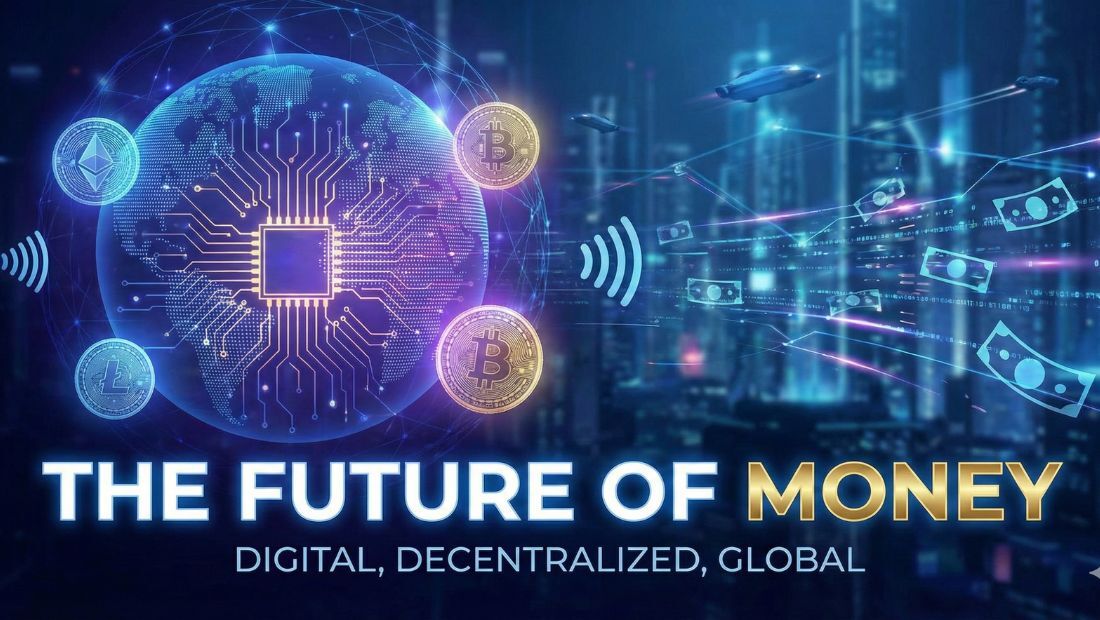
The global financial system is undergoing one of the most significant transformations in modern history. Traditional banking models, physical currency, and centralized financial control are being reshaped by digital innovation, changing consumer behavior, and evolving regulatory frameworks. As technology accelerates and economies adapt, the very definition of money is being reimagined.
Understanding the future of money is no longer optional. For individuals, it affects savings, investments, and financial security. For businesses, it influences capital access, payments, and growth strategies. For governments and regulators, it presents both opportunities and systemic risks. This article explores the economic backdrop, technological disruption, new financial business models, regulation, and long-term projections that will define the world financial market over the next decade.
Global Economic and Macroeconomic Outlook
Macroeconomic conditions remain a critical driver of financial market behavior. By 2025, interest rates, inflation control, and central bank policies are expected to guide global investment flows and risk appetite.
In Brazil, projections indicate the Selic rate hovering around 12.63%, while IPCA inflation is expected near 4.40%. This environment continues to favor post-fixed investments, government bonds, and income-generating assets, especially for conservative and medium-risk investors. High interest rates also impact credit costs, consumer spending, and corporate expansion strategies.
Globally, emerging markets are anticipated to benefit from capital inflows directed toward infrastructure development, clean energy, digital transformation, and sustainable finance. Meanwhile, monetary policy decisions by the U.S. Federal Reserve and the European Central Bank will remain major influencers of global liquidity, currency volatility, and equity market performance.
›SEE MORE DETAILSKey macroeconomic highlights include:
- Elevated interest rates shaping fixed-income investment strategies
- Inflation management influencing long-term wealth preservation
- Increased focus on sustainability-driven capital allocation
- Global interconnectedness amplifying financial market volatility
Digital Transformation and Financial Technology Innovation
Technology is the most powerful force reshaping the future of money. Artificial Intelligence (AI), blockchain, and digital platforms are fundamentally changing how financial services are delivered and consumed.
AI-driven financial solutions now automate portfolio management, risk assessment, fraud detection, and customer support. Robo-advisors and AI-powered analytics tools are improving investment decision-making, cost efficiency, and personalization across wealth management platforms. Financial education tools powered by AI are also expanding access to knowledge, particularly in underserved regions.
Blockchain technology introduces secure, transparent, and immutable transaction systems. Through asset tokenization, real-world assets such as real estate, bonds, and commodities can be digitally represented, lowering entry barriers and increasing market liquidity. Smart contracts reduce the need for intermediaries, enhancing operational efficiency.
At the same time, cryptocurrencies and Central Bank Digital Currencies (CBDCs) are redefining payment systems. While cryptocurrencies offer decentralization and alternative stores of value, CBDCs aim to modernize national payment infrastructures while maintaining regulatory oversight.
Major technological drivers include:
- AI in financial planning and investment management
- Blockchain-based settlements and smart contracts
- Tokenized assets expanding capital market access
- Fully digital neobanks and fintech platforms
New Financial Business Models and Investment Paradigms
The rise of Decentralized Finance (DeFi) represents a structural shift in financial intermediation. DeFi platforms enable peer-to-peer lending, borrowing, and trading without traditional banks, relying instead on automated protocols. While these platforms offer efficiency and transparency, they also introduce risks related to volatility, smart contract vulnerabilities, and regulation gaps.
Open Banking frameworks further accelerate competition by allowing secure data sharing between institutions. This interoperability leads to more customized financial products, better credit scoring, and improved customer experiences. Consumers benefit from increased choice and transparency, while financial institutions innovate to remain competitive.
Another defining trend is the rapid expansion of ESG (Environmental, Social, and Governance) investing. Investors increasingly prioritize sustainability, ethical governance, and long-term impact. ESG-aligned portfolios are now mainstream, influencing asset allocation decisions across institutional and retail investors.
Financial Inclusion and Economic Empowerment
Digital finance plays a crucial role in expanding financial inclusion. Mobile banking, digital wallets, and alternative credit models are enabling millions of previously unbanked individuals to access financial services for the first time.
Estimates suggest that by 2030, expanded financial inclusion could generate over $4.4 trillion in global economic value. Small businesses gain access to credit, individuals build credit histories, and communities strengthen economic resilience.
AI-powered financial literacy platforms support this transformation by helping users understand budgeting, savings, investment risks, and fraud prevention. Closing the financial knowledge gap is essential to ensuring that innovation benefits society as a whole.
Regulation, Compliance, and Financial Security
As innovation accelerates, regulatory oversight and cybersecurity become increasingly critical. Financial institutions face rising threats from data breaches, digital fraud, and cyberattacks, prompting heavy investment in encryption, biometric authentication, and real-time monitoring systems.
Regulators worldwide are working to establish clear frameworks for:
- Cryptocurrency trading and custody
- Tokenized securities and digital assets
- Fintech operations and consumer protection
- Central Bank Digital Currency issuance
Regulatory sandboxes have emerged as controlled environments where new financial products can be tested without systemic risk. These initiatives balance innovation with market stability, allowing policymakers to adapt regulations to rapidly changing technologies.
Long-Term Projections and Future Challenges
Looking ahead, financial markets are expected to see increased migration toward non-bank financial services, with fintechs and big technology firms playing a larger role in payments, lending, and asset management.
Long-term investment opportunities are likely to concentrate in:
- Technology and artificial intelligence
- Green energy and climate finance
- Digital infrastructure and cybersecurity
- Retirement planning and pension funds
However, challenges remain. Institutions must continuously adapt to new technologies, manage cyber risks, and ensure compliance across jurisdictions. Individuals must invest in financial education and digital literacy to navigate increasingly complex markets.
Conclusion: Redefining Money in a Digital World
The future of money lies at the intersection of technology, regulation, and inclusion. Digital innovation is making financial systems faster, more accessible, and more efficient, while regulatory frameworks strive to maintain trust and stability.
Those who embrace change—by investing in financial education, adopting secure digital tools, and understanding evolving market dynamics—will be best positioned to thrive. As money continues to evolve beyond physical currency into programmable, digital, and data-driven systems, the opportunity to build a more inclusive and sustainable global financial ecosystem has never been greater.
Now is the time to rethink financial paradigms, develop future-ready skills, and actively participate in shaping a smarter, safer, and more connected financial world
